

Before You Vote: Immigration, Jobs and Provincial Control
A Nonprofit’s Guide to Alberta’s October Referendum: Who should call the shots on immigration?
We explore Question 1 in our series breaking down the 2026 Alberta referendum.
What the Government is Asking
Immigration is the focus of the first question on Alberta's referendum ballot, and the first of five immigration-related questions voters will be asked to consider. Question 1 asks:
“Do you support the Government of Alberta taking increased control over immigration for the purposes of decreasing immigration to more sustainable levels, prioritizing economic migration and giving Albertans first priority on new employment opportunities?”
Voters will be asked to choose yes or no.
A ‘Yes’ vote signals support for the Alberta government to seek greater control over immigration - to reduce immigration, prioritize immigration types, and prioritize Albertans access to jobs. Because the referendum is non-binding, the government is not legally required to pursue these changes.
A ‘No’ vote signals a lack of support for the Alberta government to pursue these changes, though the government is still legally entitled to pursue them.
Should the Government of Alberta choose to pursue these changes, it cannot make them on its own. Immigration is a shared responsibility under Canada's Constitution, and significant changes to Alberta's authority over immigration would require cooperation with the federal government. Any considerations for moving towards an Alberta-controlled immigration model or “Alberta-first” employment policy would still be subject to our Canadian Constitution.
This is one of the trickiest questions on the ballot, because it combines four distinct ideas into one yes-or-no vote:
Increased provincial control over immigration
Less immigration
Prioritizing economic migration
Giving Albertans first access to jobs
The question presents increased provincial control as the means to achieving the other three objectives. A "Yes" vote supports the full package, while a "No" vote rejects it. Voters cannot express support for one objective without also expressing support for the others.
The government has not defined what "increased control" or "more sustainable levels" would mean in practice.
Learn More
Visit the Government of Alberta’s website on the referendum here.
Why the Government Has Proposed This Change
The Government of Alberta has expressed support for a "Yes" outcome to this question. Some of its objectives are stated within the question itself: reducing immigration to what it considers more sustainable levels, placing greater emphasis on economic immigration, and giving Albertans first priority for new employment opportunities.
On its website, the government also cites the following concerns:
Government ability to fund and deliver services: “The federal government’s unsustainable immigration levels over the past 10 years have a profound impact on the Government of Alberta’s ability to fund and effectively deliver social services like health care and education.”
Albertans’ ability to access services: “[Immigration levels set by the federal government are] directly impacting Albertans’ access to [health care and education] and costing taxpayers billions of dollars.”
The government states that “more sustainable immigration policies are needed to properly support our economy, communities and social services – and put Albertans first” and that they need more oversight to “ensure that immigration works for both Albertans and new immigrants.”
The referendum question does not describe what additional immigration powers Alberta would seek or how those powers would be used if approved.
For Nonprofits
Nonprofits are on both sides of the immigration equation: some deliver settlement services, others depend on newcomers as 27% of the sector's workforce. Population growth increases demand for nonprofit services. Newcomers also strengthen the sector as volunteers, donors, community leaders, and participants in arts and cultural life.
Research presented at the 2026 Connections Conference suggests Alberta will soon face a shortage of care as the population ages – one that will place growing pressure on a shrinking workforce, with serious consequences for the economy. Immigration policy will help shape whether Alberta has the workforce needed to provide that care, particularly as Canada competes with countries facing similar demographic pressures.
The first referendum question asks us who should have the biggest say in immigration decisions. Should Alberta have greater control, aligning immigration levels and selection criteria with provincial priorities? Or is immigration best managed through a nationally coordinated system currently designed to balance economic, family, and humanitarian objectives across Canada?
About Alberta's Growing Population
Alberta’s population has been growing. This growth comes from three main sources: international migration, interprovincial migration (Canadians moving between provinces), and natural increase (births minus deaths). In the last several years, international migration has accounted for roughly 65% of total provincial growth, whereas interprovincial accounted for 22%, and natural increase accounts for 13% of growth (Fig.1 & Fig.2). Question 1 of the referendum focuses on changes to international immigration.
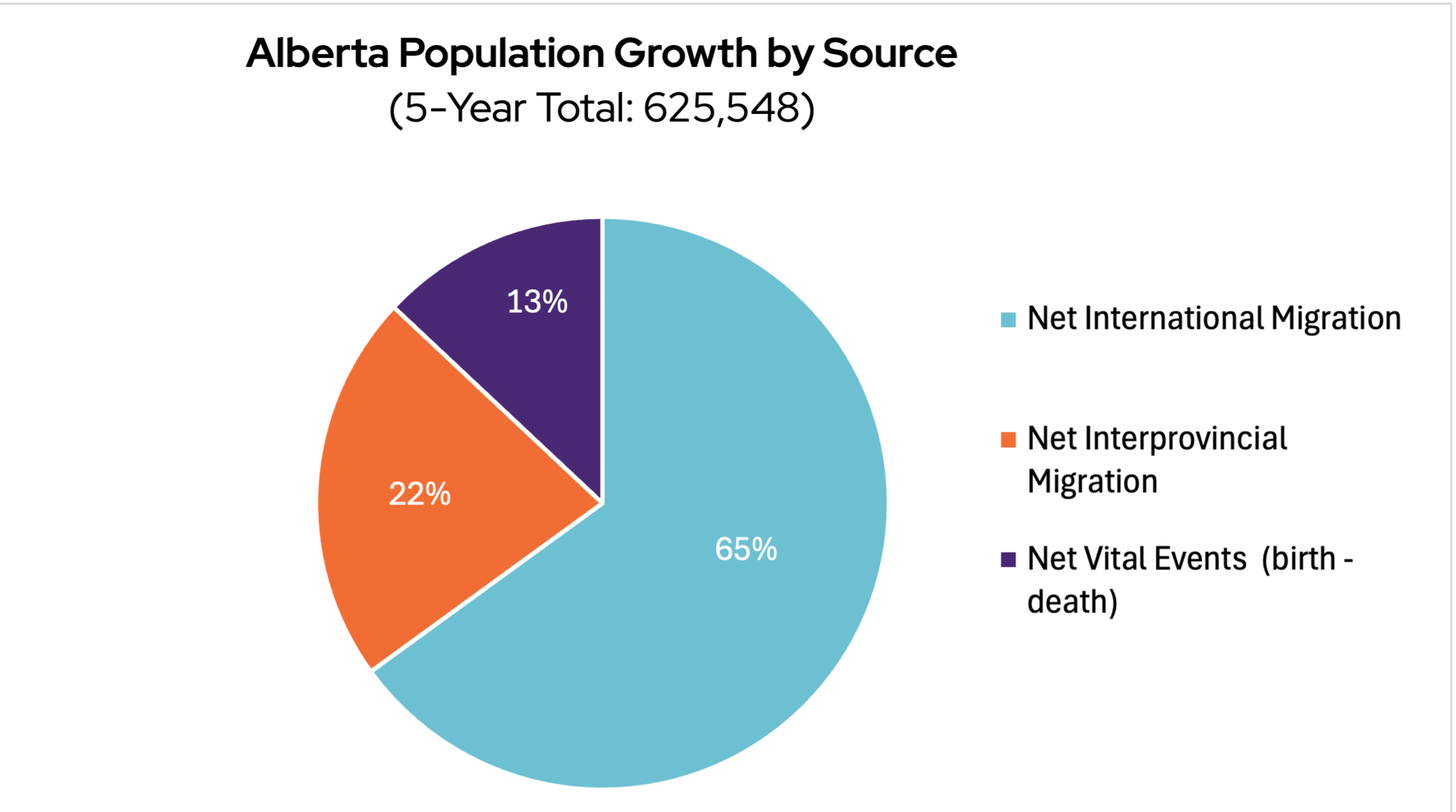
Figure 1: Alberta population growth by type. Source: Alberta Quarterly Population Report
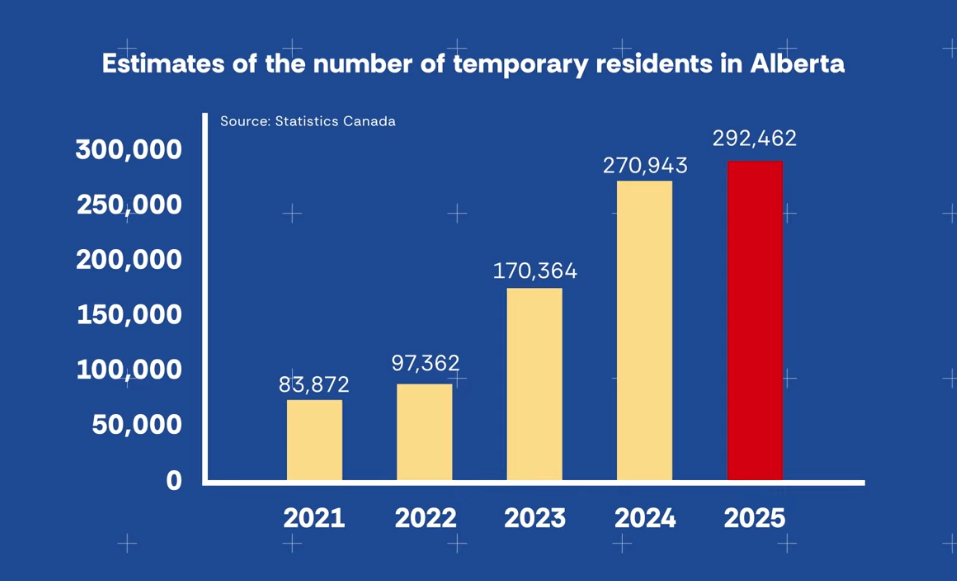
Figure 2: Population growth in Alberta accounted for by newcomers, 2021-2025. Source: Alberta Referendum 2026
Did you know?
As of April 1 2026, there were an estimated 261,031 non-permanent immigrants living in Alberta.
International immigration is one of the main ways Canada grows its economy, population, and skilled workforce. Newcomers arrive through a range of permanent resident pathways, including economic immigration, family reunification, refugee and humanitarian programs, and temporary streams such as international students, temporary foreign workers, and asylum claimants.
The federal government sets overall immigration targets and manages most immigration programs. Provinces play a role in selecting some newcomers and identifying local labour market needs through provincial nominee programs.
Economic immigration is a pathway to permanent residence, and the one the Province wants to prioritize in Question 1 of the referendum. Economic immigration aims to attract people with the skills, experience, and qualifications needed to support labour market needs and economic growth. Canada has prioritized economic immigration among new permanent residents, which accounted for about 58% of all permanent residents welcomed to Canada in 2024. The Alberta Advantage Immigration Program is one pathway within economic migration, in which Alberta has a role in nominating some newcomers for permanent residence based on provincial priorities.
In 2024, 66,390 permanent residents arrived in Alberta
30 % of permanent residents that came to Alberta in 2024 were admitted through the Alberta Advantage Immigration Program (Provincial Nominee Program)
Over the 2000s and 2010s, Canada's immigration system shifted from welcoming primarily permanent residents to what is sometimes called a "temporary-first" model: more newcomers arrived first as international students or temporary foreign workers before later applying for permanent residence. This model was purported to help address labour shortages and allow newcomers to gain Canadian work experience before settling permanently. In 2025, more than half of Canadians felt that rapid growth in temporary resident populations increased pressure on employment, housing, infrastructure, and public services – many of the services managed by the provinces. As public perception of immigration has shifted more negatively, provincial governments have sought greater control over the federally regulated temporary resident programs and levels in order to sustain their own local services.
The current federal government has shifted its priorities towards recruiting primarily permanent residents, with a target to reduce Canada's temporary population to less than 5% between 2026 and 2028. A one-time initiative will transition 33,000 skilled temporary workers already living in Canada to permanent residents over 2026 and 2027.
The referendum question does not define what "increased provincial control over immigration" would mean in practice. Depending on how it was pursued, greater provincial control could involve more influence over immigration levels, a larger role in selecting newcomers, or greater authority to align immigration policies with Alberta's economic priorities. Significant changes would require the cooperation of the federal government. Some areas, such as refugee protection and asylum, remain federal responsibilities under Canada's international commitments.
Non-permanent residents (NPR) are defined by Statistics Canada as individuals with a temporary resident status, which includes: individuals and their families with work permits; individuals and their families with study permits; or people who have made a refugee claim but whose status hasn’t been finalized.
Permanent & Temporary Residents: What’s the difference?
Permanent residents: come to Canada, either by applying or through recruitment, through 3 streams: economic (work opportunities), family (reunification), and Refugees and Protected Persons, Humanitarian and Compassionate and Other (usually part of international agreements, referrals, and supporting individuals fleeing conflict). They can live and work in Canada indefinitely and apply to become a Canadian citizen, which grants the highest level of legal status in Canada. Canadian citizens have voting rights, a Canadian passport, and can work high-security clearance jobs in government and military.
Temporary (non-permanent) Residents: here on a temporary basis and must leave Canada once their permits and visas have expired. They can apply for permanent residency while here temporarily. They include temporary workers, seasonal workers, students, asylum claimants, and visitors and tourists.
Prioritizing Alberta Employment
The question proposes prioritizing employment opportunities for Albertans. An employment policy like this must operate within constitutional protections such as Canadians’ mobility rights. The Charter of Rights and Freedoms outlines that every Canadian citizen and permanent resident has the right to move, reside, and work in their province of choice – a mechanism that protects fundamental human rights and against discrimination based on residence. This is one section of the Charter that explicitly states it cannot be overruled by the notwithstanding clause.
Temporary residents’ movement and employment in Canada is controlled by their immigration permit, which includes how long they can remain in Canada and where they can live and work.
Any regulation that’s proposed by the provincial government to prioritize employment for Albertans would likely be subject to a constitutional review.
How Nonprofits Can Get Involved
Interested in learning more about how you and your organization can get involved? See our post on the rules of engaging with the referendum, so that you and your organization can advocate responsibly.
Stay tuned for the next post. If you have any questions, reach out to us - policy@thenonprofitchamber.org