

Rules for Nonprofits Engaging in the Referendum
We’ve created a resource outlining the key rules and considerations for nonprofits and charities engaging in public dialogue around the upcoming October 19th referendum. We hope it serves as a practical reference as organizations begin planning their activities and communications. (Please make sure you do your own due diligence and do not use this resource as legal advice.)
Share the resource with other organizations looking to get involved!
For a summary of the 10 referendum questions, see the Nonprofits Vote blog.
How Nonprofits Can Get Involved
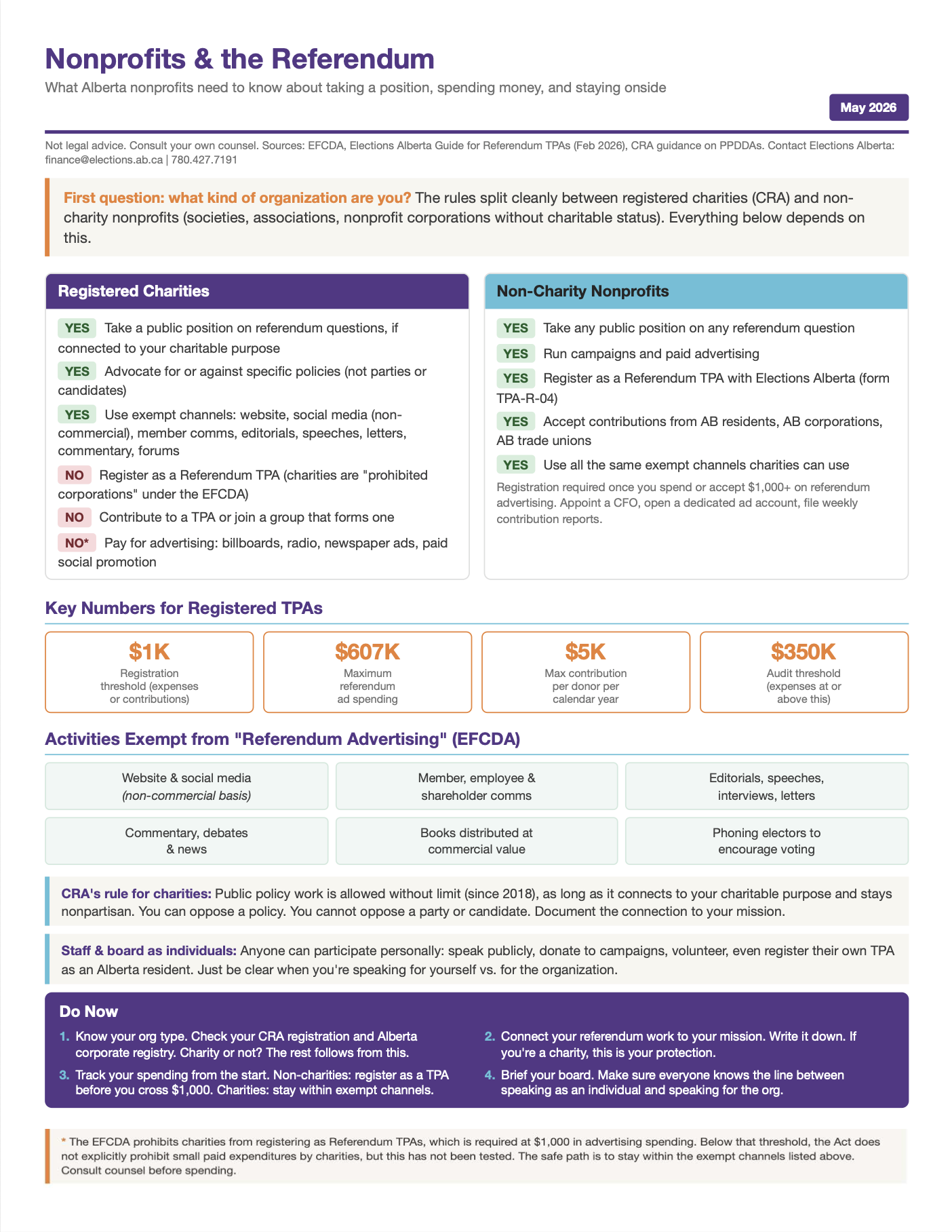
Click to open the file and download!
The most important things we can all do individually are to get informed, discuss – and go vote! Speak to your peers, colleagues, networks and neighbours. Encourage those around you to show up at the polls on October 19. Nonprofits Vote will be sharing a vote kit later this summer to help you find when, where, and how to vote. Anyone can participate personally: speak publicly, donate to campaigns, or volunteer.
Your organization can share information about how to vote and how the referendum affects your mission. If your nonprofit decides to take a position on referendum questions, the same engagement rules from our last post apply:
$1000 threshold for third-party advertiser registration: Nonprofits must register with Elections Alberta as a third-party advertiser once they’ve spent $1,000 in referendum advertising expenses. Advertising includes promoting or opposing, or taking a position on, an issue associated with a question in a referendum. Paid advertising expenses include paid social media promotion, billboards, and newspaper ads. Track your spending from the start.
CRA rules on charities and political activity: registered charities can only take a public position on the referendum questions if it is connected to their charitable purpose. Keep track of how the referendum connects to your mission. Charities can be political, not partisan.
Board governance considerations: get your board on board. Make sure everyone is comfortable with the position your organization may take, and that everyone understands the difference between speaking as an individual versus speaking for the organization.