


The Change Starts with Us
2025 State of the Sector Report

It’s been a year of determined progress for Alberta’s nonprofit sector and one reflecting increased optimism in the sector nationwide.
It’s been a year of determined progress for Alberta’s nonprofit sector. Core challenges remain: tight funding, rising costs, and the ongoing struggle to retain staff and volunteers. Newly available data confirms what we have been hearing from nonprofits about the narrowing gap between income and expenses. But as inflationary pressures ease, optimism has been rising nation-wide. At the same time, our sector is responding to challenges collaboratively and systematically, and we have achieved wins worth celebrating. Together, we have advanced key policy priorities: securing critical feedback from the sector on more appropriate funding models, building momentum for a sector-wide workforce strategy, and, seeing the most progress, improving access to better data. These building blocks make our sector more capable of developing strategy in the face of challenges.
New challenges continue to surface. The most recent: international tariff wars threaten to make life more expensive for Canadians, businesses, nonprofits, and increase demand on nonprofits. This shifting economic context is sowing unease among Canadians and among nonprofits, and motivated our sector to call for inclusion in tariff conversations.
This year’s State of the Sector is a celebration of our collective resolve. In particular, we share improvements to available sector data, made possible through collaboration with invaluable partners - and new insights into the financial position and funding priorities of nonprofits. Together, these developments reflect a sector increasingly able to learn, strategize and adapt and support our essential work in Alberta communities.
About the Data
This report pulls from Statistics Canada, Government of Alberta, and Canada Revenue Agency data. Some of this data has been pulled into new dashboards, one in collaboration with the Government of Alberta and one in progress with students from Georgian College. We compare these larger data sets with surveys distributed by the Nonprofit Chamber: our Interactive Budgeting Tool, distributed in 2024 with 370 responses, aimed at identifying nonprofit funding priorities; and the 2025 State of the Sector Survey, with 287 responses this year. Both of these surveys garnered responses from diverse subsectors and nonprofit sizes. Respondents were primarily charities, including 65% of those who completed the Interactive Budgeting Tool and 72% of those who completed the State of the Sector Survey. The largest shares of respondents were based in Calgary, at 58% and 48% for those surveys.
About the Sector
314,000 nonprofit employees
$6.2 billion contributed to the GDP
$5.6 billion estimated volunteer contribution
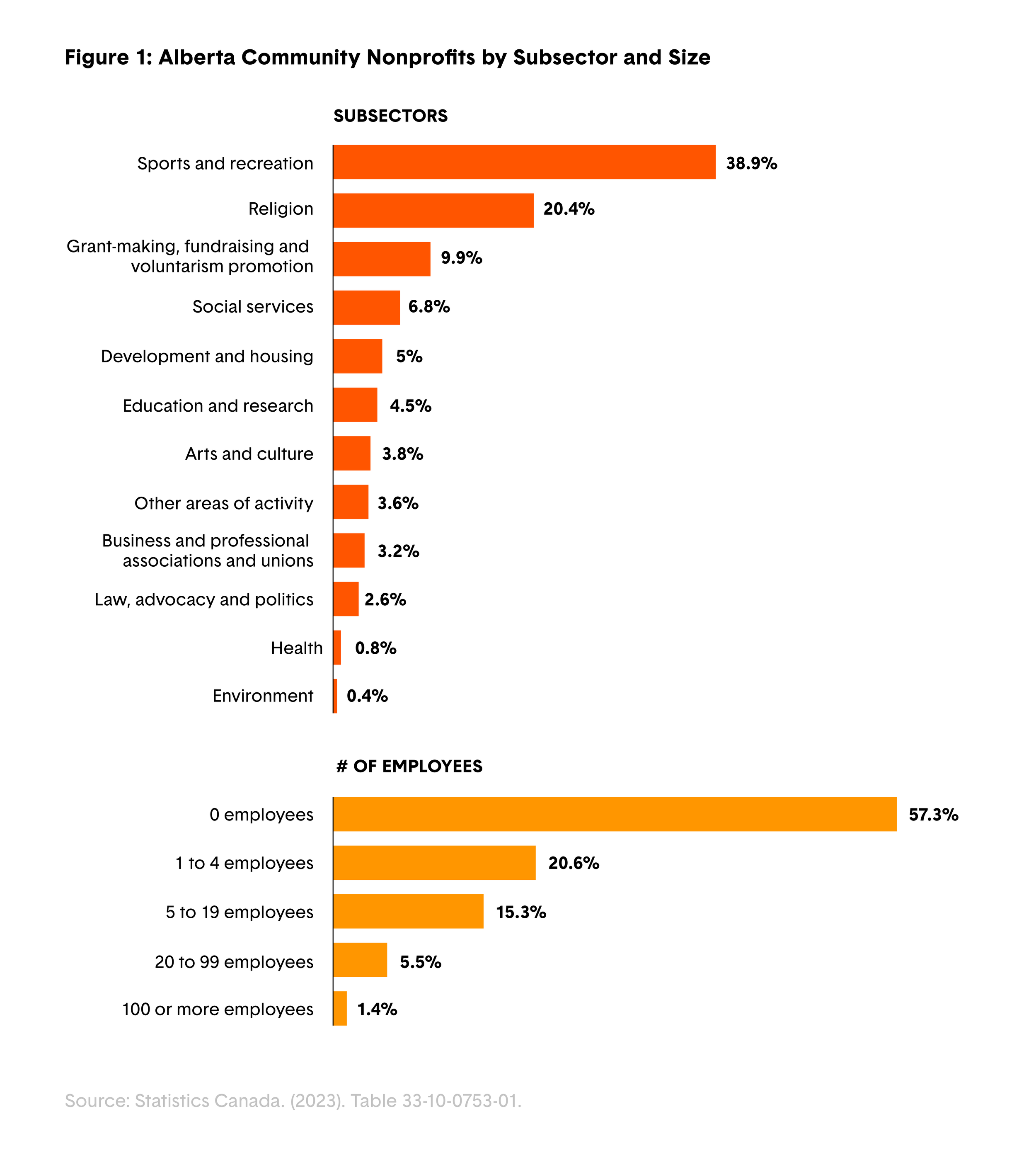
Alberta’s nonprofit sector employs 314,000 people[1], 72% of whom are women and 34% of whom are visible minorities[2]. Activities performed in the nonprofit sector span poverty reduction, health, mental health, arts and culture, environment, cultural and language support, immigrant settlement, childcare, sport and recreation and more. The sector contributes an estimated $6.2 billion to Alberta’s GDP[3], with volunteerism adding another $5.6 billion in value each year[4]. In fact, 57% of Alberta nonprofits operate with no paid staff, and another 21% employ fewer than five people[5]. See Figures 1 for more on the distribution of community nonprofits according to sub-sector and employee size.
Nearly half of workers hold post-secondary credentials, including 148,000 with university degrees, 72,000 with college diplomas, and 12,000 with trade certificates[6].
While women make up the majority of employees, they occupy 58% of senior management positions and 45% of board seats. Racialized and Indigenous people are also significantly under-represented in governance and leadership. While wages for immigrants and non-immigrants are on par, wage disparities persist for women, visible minorities and Indigenous people[7].
Salary comparisons[8]
Average male salary: $64,789, Average female salary: $51,171
Average visible minority salary: $50,107, $55,812 for non-visible minorities
Average Indigenous salary: $45,452 vs. $54,607 for non-Indigenous workers
Average immigrant salary: $54,606, roughly on par with non-immigrants ($54,042)
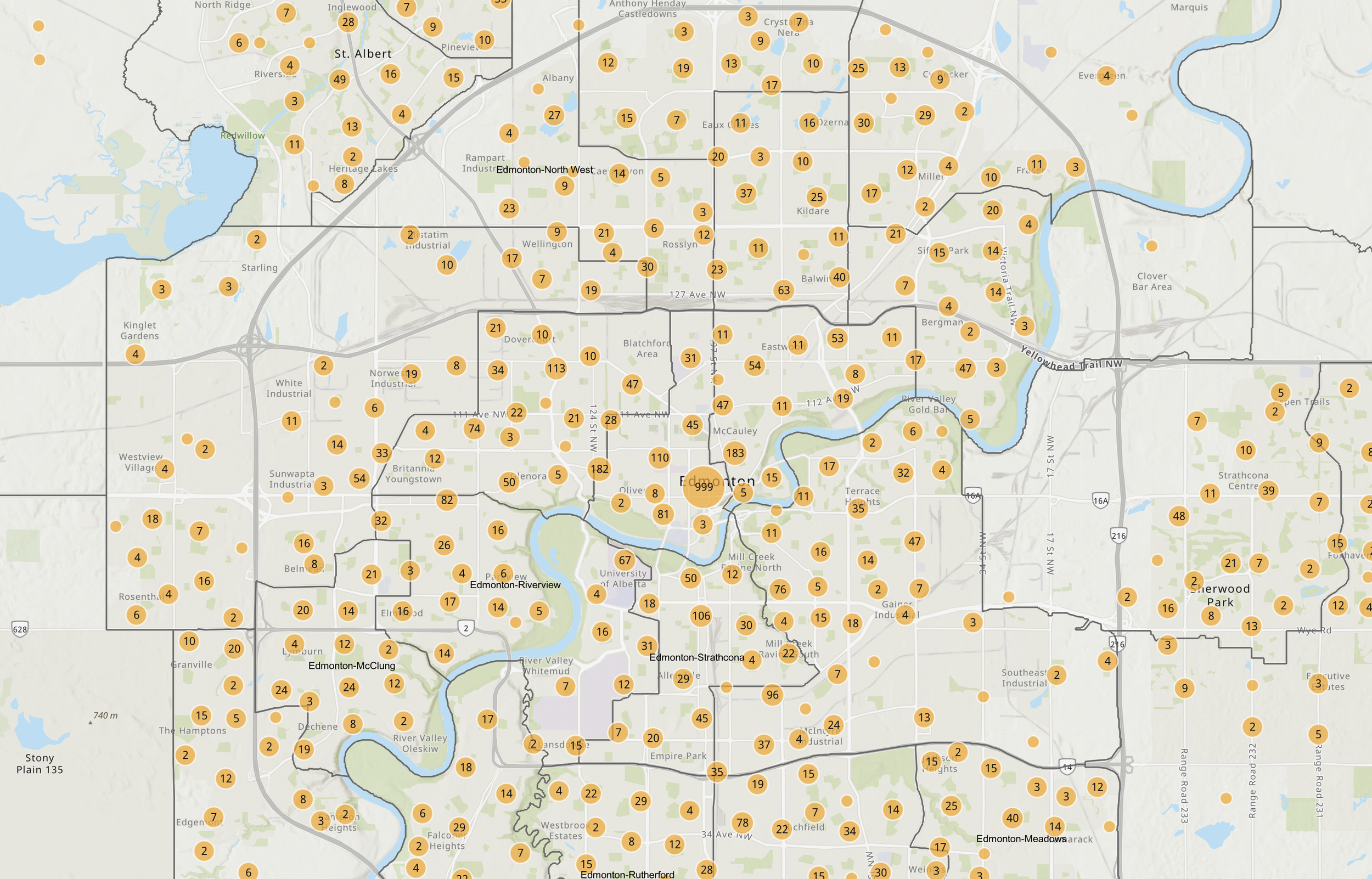
Data Dashboard
Discover where your nonprofit fits into Alberta’s bigger picture—and where new opportunities for collaboration may be waiting.
In the past, it has been difficult to get a clear picture of the size, scope, and diversity of Alberta’s nonprofit sector.
The Government of Alberta worked with the Nonprofit Chamber to merge sub-sector data with their provincial nonprofit listing, resulting in the following dashboard. It allows us to identify what kind of work - and how much of it - is being performed across the province.
While the dashboard is a work in progress, it demonstrates the art of the possible. We will continue to improve it over time, including classifying nonprofits currently self-reported as “Blank”. You can help! We invite you to search for your organization in the listing and contact us if you would like to update your subcategory.
For individual nonprofits, this dashboard could be a powerful tool to show where your work connects with others nearby and across the province, and highlight where communities may need more support. At a higher level, better data can help our sector more effectively demonstrate impact, identify gaps, and guide conversations on funding, workforce development, and policy priorities.
We extend our warm thanks to the Government of Alberta for making this project possible and for recognizing the importance of data in strengthening Alberta’s nonprofit sector.
The State of
the Sector

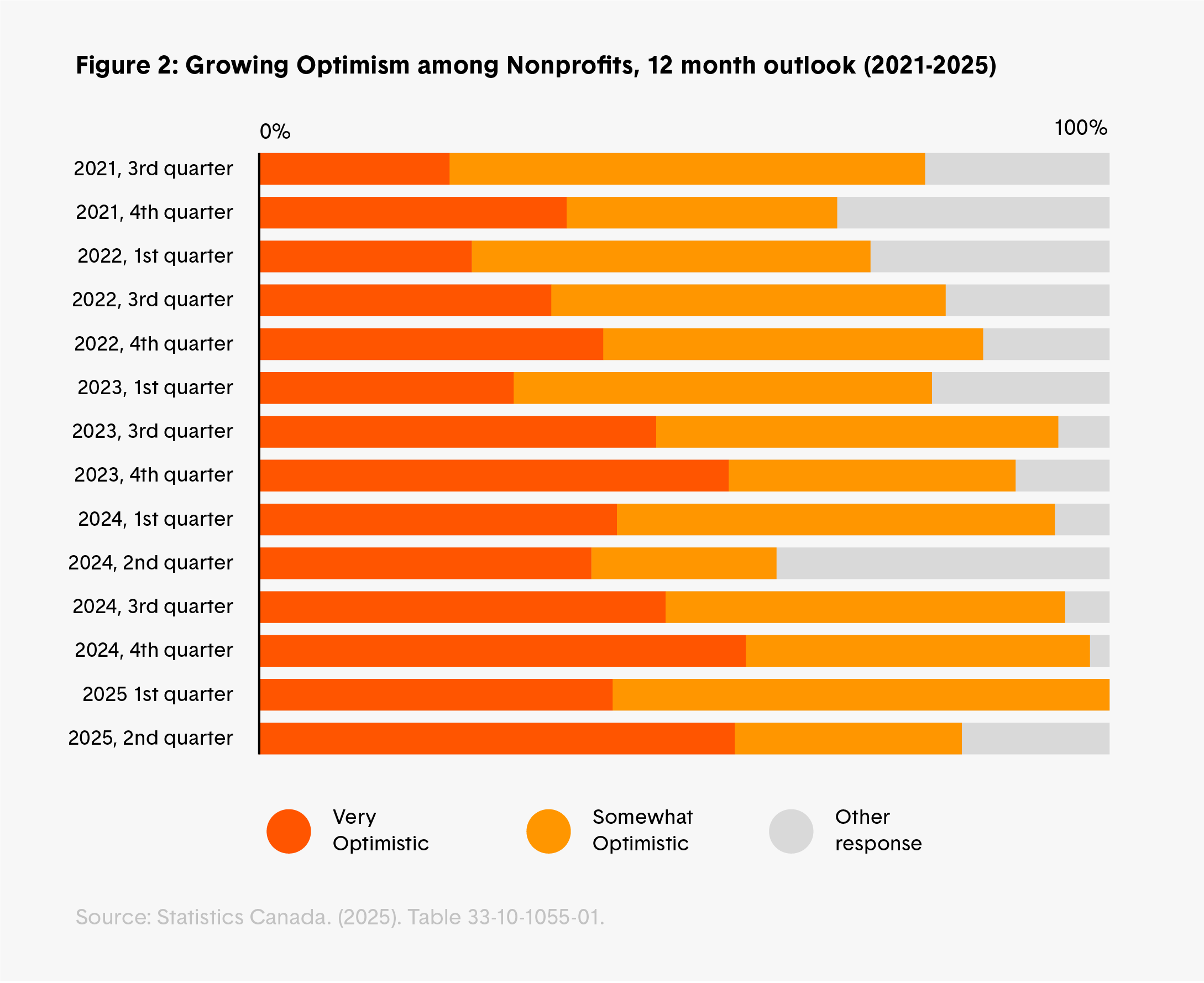
Alberta nonprofits continue to face challenges spotlighted in last year’s report: rising demand, staff retention, financial instability, and burnout. Yet survey data shows growing optimism in the sector’s 12-month outlook, possibly linked to easing inflation.

Persistent Pressures: Demand, Staffing, Burnout & Financial Strain
Heading into 2025, many of the pressures detailed in the 2023 report Facing the Storm remain unresolved. Nonprofits across Alberta continue to face high demand for services, driven by economic instability and widening affordability gaps. Food banks across Canada, for example, set records in March 2025 for highest number of visits ever recorded, doubling those recorded in March 2019[9].
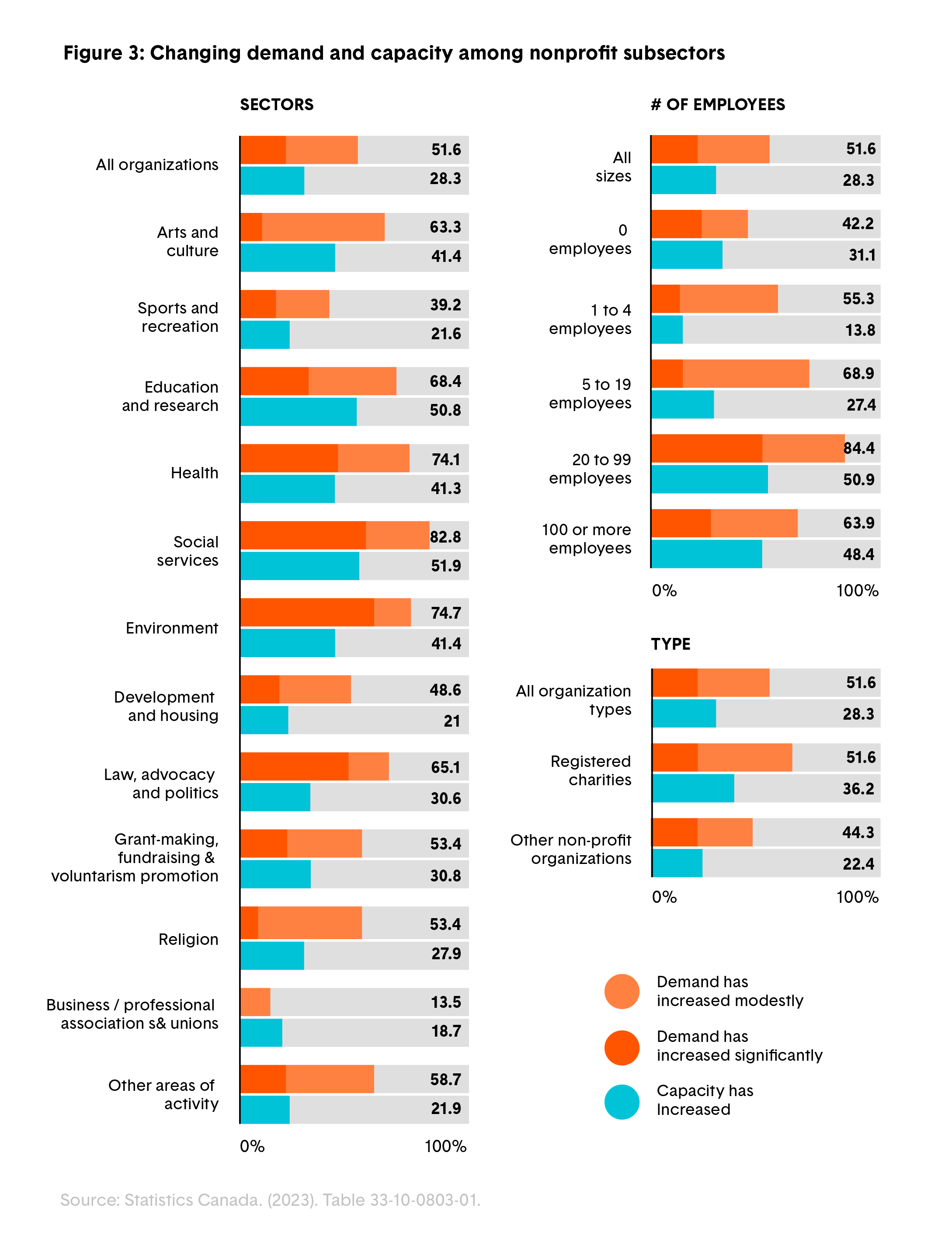
According to Statistics Canada, more than half of Alberta nonprofits reported increasing demand in 2023, while capacity largely remained the same or decreased (see Figure 3). Our internal survey aligns, with a majority of nonprofits reporting their “ability to meet demand for services” as challenging.
Differences exist among subsectors: social services, environmental and health organizations see the highest increases in demand.
Survey says
68% of respondents report “Ability to meet demand for services” as challenging
While inflation has eased, nonprofits continue to operate within tight budgets. Rising operational costs, flatlined core funding, and increased administrative demands are forcing difficult trade-offs, especially for small and mid-sized organizations.
Survey says
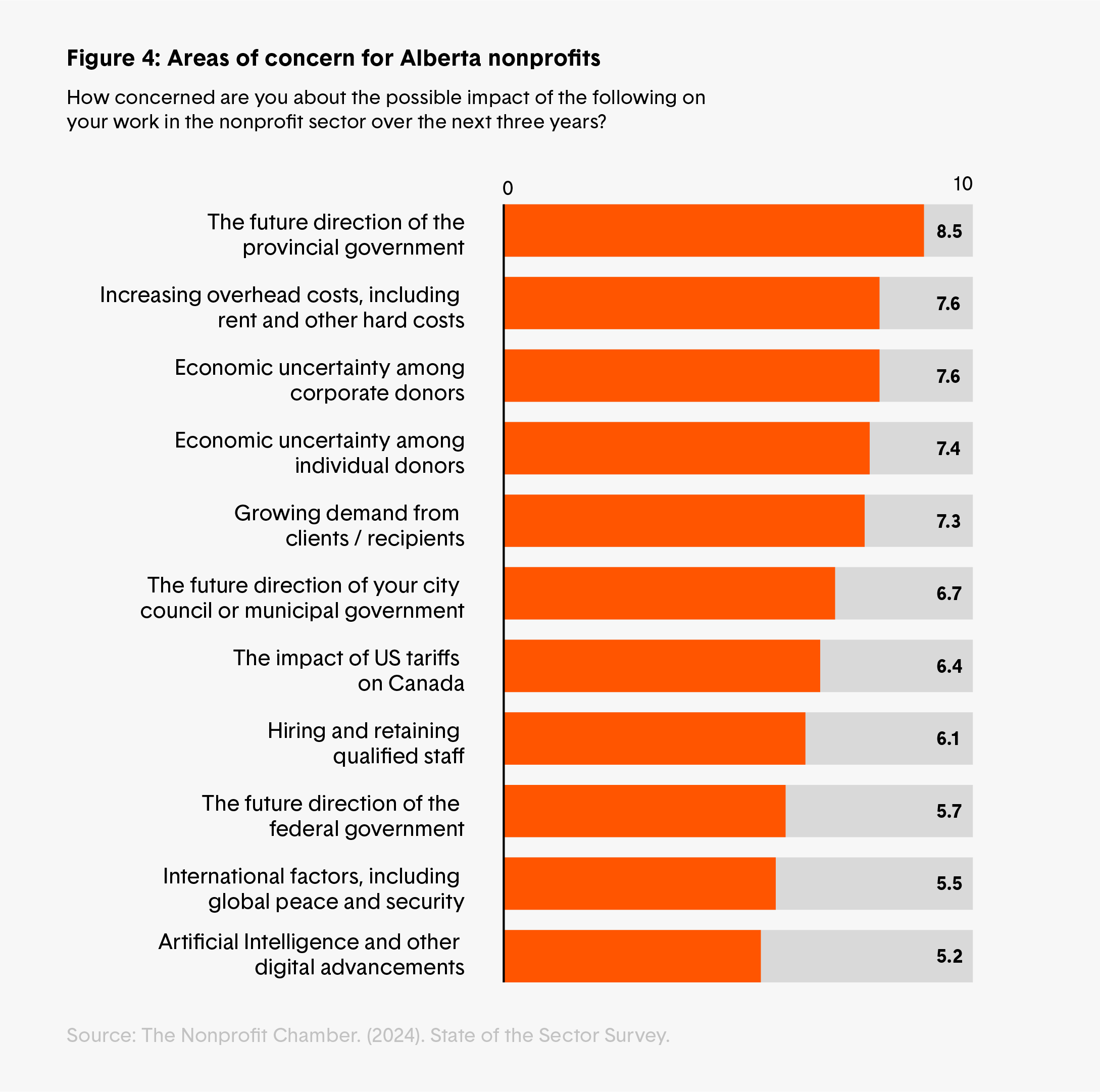
Increasing overhead costs are ranked second among a list of nonprofit concerns.
Workforce challenges are equally persistent. Organizations continue to struggle with attracting and retaining qualified staff. Burnout and mental health strain remain widespread across the sector, especially among frontline workers and leadership[10].
While 2025 has brought signs of renewed optimism and opportunity, the foundational cracks identified in Facing the Storm persist. Without structural changes to funding and workforce conditions, these challenges will continue to hinder the ability of nonprofits to meet rising need and deliver on their missions.
Survey says:
41% of respondents cite staff recruitment as challenging
41% of respondents cite staff recruitment as the same as it had been previously
46% of respondents cite volunteer recruitment as challenging
32% of respondents cite volunteer recruitment as the same as before
According to Stats Canada:
52% of nonprofits report increasing demand
62% of charities report increasing demand
72% of nonprofits report capacity remaining the same or decreasing

A Shifting Landscape
The nonprofit sector in Alberta is operating within a rapidly evolving landscape that features technological change, shifting work norms, and political uncertainty. While core concerns like financial stability and staff wellbeing remain dominant, nonprofits are increasingly aware of external forces that could shape their future operations.
Remote Work and the Nature of Work
Remote work trends continue to evolve, but are likely here to stay in some form, with 75% of Canadian charitable organizations offering flexible work arrangements[11]. Some organizations are embracing hybrid models while others struggle to maintain cohesion and culture across dispersed teams. While flexibility remains a valued feature of post-pandemic operations, the long-term implications for collaboration, service delivery, and volunteer engagement are still playing out unevenly across the sector[12].
At the same time, artificial intelligence (AI) is transforming how nonprofits function. From grant writing and communications to predictive data analysis and administrative automation, AI tools are reshaping the sector’s capacity and workflow. More organizations are experimenting with these technologies to manage workloads and extend impact. On the one hand, there is a sense that an under-resourced sector that contributes so much to our communities cannot ignore what AI tools can do for us [15]. However, as adoption increases, so do ethical, social, and environmental considerations. Nonprofits must now weigh the benefits of AI against substantial concerns about data privacy, intellectual property, algorithmic bias, misinformation, water use, and carbon emissions associated with large-scale computing that could destabilize climate change mitigation efforts. It also risks increasing the rural-urban divide, with new Alberta-based data centres unlikely to create substantial employment, but consuming energy and water with impacts to fisheries, agriculture and First Nations [14]. The Nonprofit Chamber will be exploring the impacts of AI on the nonprofit sector further over the coming year.
51% of Canadians are using AI in the workplace [13]
“I feel like the social sector always eats last at the table when it comes to technology and innovation…It’d be great if, as these tools develop, they can also help the people who need it most.”
- Kevin Barenblat, Fast Forward[15]
“Farmers argued that [a relatively small proposed data centre] project’s stormwater and cooling demand would place pressure on irrigation systems that were already strained during drought conditions.”
- Falice Chin, The Hub [14]
Political and Global Uncertainty
The political climate has become a growing source of unease, and in the 2025 State of the Sector Survey, which was distributed prior to the release of new provincial mandate letters, the direction of the provincial government emerged as the top-rated concern (Figure 4). Policy shifts and uncertainty in provincial funding may be compounding organizational stress, especially for nonprofits delivering services that align closely with government mandates.
While tariffs and global trade tensions did not top the list of nonprofit concerns, they were far from negligible. In the 2025 survey, 66% of respondents rated their concern about tariffs at 6 out of 10 or higher. The economic ripple effects are real: Edmonton’s Food Bank projected a 50% increase in food costs—rising from $4 million to $6 million—due to trade-related price hikes[16].
These changes are prompting nonprofits to advocate more forcefully for inclusion in federal relief strategies. The Nonprofit Chamber’s recent conversations with federal leaders emphasized that if employers are to be stabilized through public policy, nonprofits must be recognized among them. Without such inclusion, the institutions Canadians rely on for food, shelter, and care may become destabilized.
Focus on the Immediate
Despite emerging pressures on the national and global stage, many nonprofits remain focused on more immediate operational challenges. Global concerns such as tariffs, artificial intelligence, political shifts, war and climate change are acknowledged and contribute to overall anxiety, but operationally they often take a backseat to more pressing issues—like maintaining staff wellbeing, stabilizing budgets, and fulfilling their core missions.
The Nonprofit Chamber released a statement calling for nonprofit inclusion in all federal relief measures, including those tied to trade disruption, and met with federal representatives to discuss.

Funding Priorities of the Sector
When asked how they would allocate additional funding, Alberta nonprofits overwhelmingly prioritized core stability over growth. Rather than expanding programs or launching new initiatives, most organizations indicated they would use new resources to strengthen what they already do—suggesting a sector still operating in a state of underresourcing (see Figure 5).
At the top of the investment list: paying staff more. Compensation, benefits, and mental health supports were repeatedly cited as critical needs. Many respondents described staff burnout, high turnover, and the emotional toll of service delivery as major threats to organizational sustainability. Overhead costs came in second, which, together with staff, amount to “keeping the lights on” (see Figure 6).
Making more unrestricted funding available – the mechanism by which many organizations can top up staffing and overhead - was a common theme in Alberta and across Canada this year[17], and one addressed by Calgary’s new mayor to nonprofit leaders in October 2025. In Canada, individual donors, earned income and fundraising events are the primary sources of unrestricted funding, leaving nonprofits in a precarious position. Statistics Canada[18] and State of the Sector respondents have reported slight increases in earned income, but fewer Canadians are donating. In our survey to Alberta’s nonprofit sector, economic uncertainty about corporate and individual donors ranked 3 and 4 among concerns listed in Figure 4, followed closely by growing demand.


“Truly, our most important need is operational funds. We cannot do our work, build, increase, or improve programs without funding our staff and office costs.”

Financial Capacity and Outlook
Alberta nonprofit incomes dipped in 2020, at the start of the global pandemic, but have been increasing since. Unfortunately, expenses have also been on an upward trend, far outpacing revenue gains made in the sector. Savings - income less expenses - decreased by nearly half from 2019 to 2023[19]. This validates the substantial distress expressed by nonprofits during that time period.
The trend is paralleled across other provinces, though several provinces saw small increases in their savings in 2020 and 2021. Alberta is faring better than some. Net savings among Manitoba, Newfoundland and PEI nonprofits have consistently been in the negative (spending more than they earn), with Ontario also dipping into the negative in 2023. British Columbia is the only province to see the opposite trend – a trend of increasing savings.
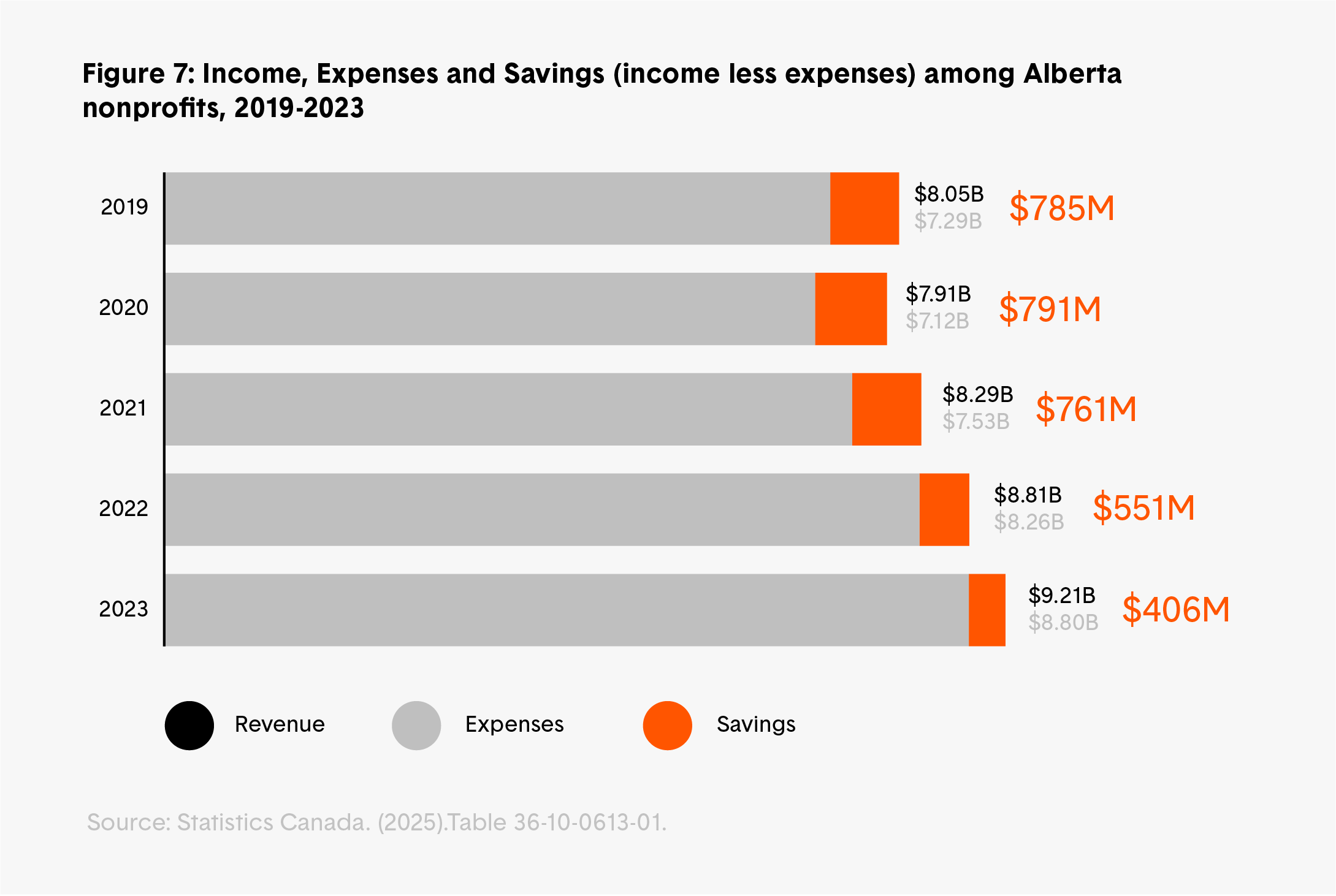
The 2025 State of the Sector survey supports Statistics Canada findings, with a majority of respondents reporting stable or slightly increasing revenues - and rising expenses. The largest increases were seen in program expenses, salaries, insurance and benefits, in that order.
Spending on salaries
On average, nonprofits spend 21% of revenues on salaries[20]. However, this changes dramatically based on size of nonprofit - as they grow, they spend more on salaries, tapering off on the high end. It also changes across sectors, with health, social services, education & research, and business/ professional associations & unions spending more on salaries.
While recent surveys suggest growing optimism about the near-term outlook, nonprofits remain uneasy about broader economic uncertainty. Concerns about inflation, the cost of living, and decreased public donations remain high, with added anxiety about the potential ripple effects of international trade disruptions.
12.4% of Alberta nonprofits receive funding from all levels of government
Government funding accounts for 35% of all nonprofit revenue
Amounts transferred to Alberta community nonprofits by different levels of government in 2023 [22]:
1.764B from provincial governments
897M from federal governments
548M from municipal governments
Fundraising
Generally, nonprofits are experiencing more self-reported fundraising success than charities, as measured against their fundraising goals. Charities, however, are more likely to receive services free of charge (73.6%) compared with all nonprofits (46.6.%) [24].
Information on nonprofit success with fundraising is available from Statistics Canada across subsectors and employment sizes.
The largest share of individual donors to charities are 65 and older, accounting for 30% of donees in 2023. This share has been rising slowly but steadily, while the share of donees under the age of 35 has been dropping slowly but steadily [25]. Total donations have been increasing, however, after a dip in 2020, and the number of donors rose in 2023 by about 50,000 [26]. Total donations are keeping up with population growth and inflation, while total number of donors are lagging well behind population growth. Dive into more details here.
According to Stats Canada:
58% of all nonprofits, and 40.8% of charities did not fundraise
Financing
Financing is another way nonprofits support their operations, encompassing: loans or lines of credit, government financing programs, mortgages, leasing or equipment financing, community bonds or impact investing. The larger share of nonprofits and charities do not apply for financing [27]. When asked why, 92% stated that financing was not required (82% for charities). The second most common reason was being unaware of sources available, reported by 7% of nonprofits and 17% of charities. For those that do apply for financing, the most common source is governmental, with 33% of charities and 28% applying for government financing.
60% of all nonprofits and 45.6% of charities are meeting 100% or more of their fundraising goals
67% of nonprofits and 57% of charities did not apply for financing

Sources of Funding
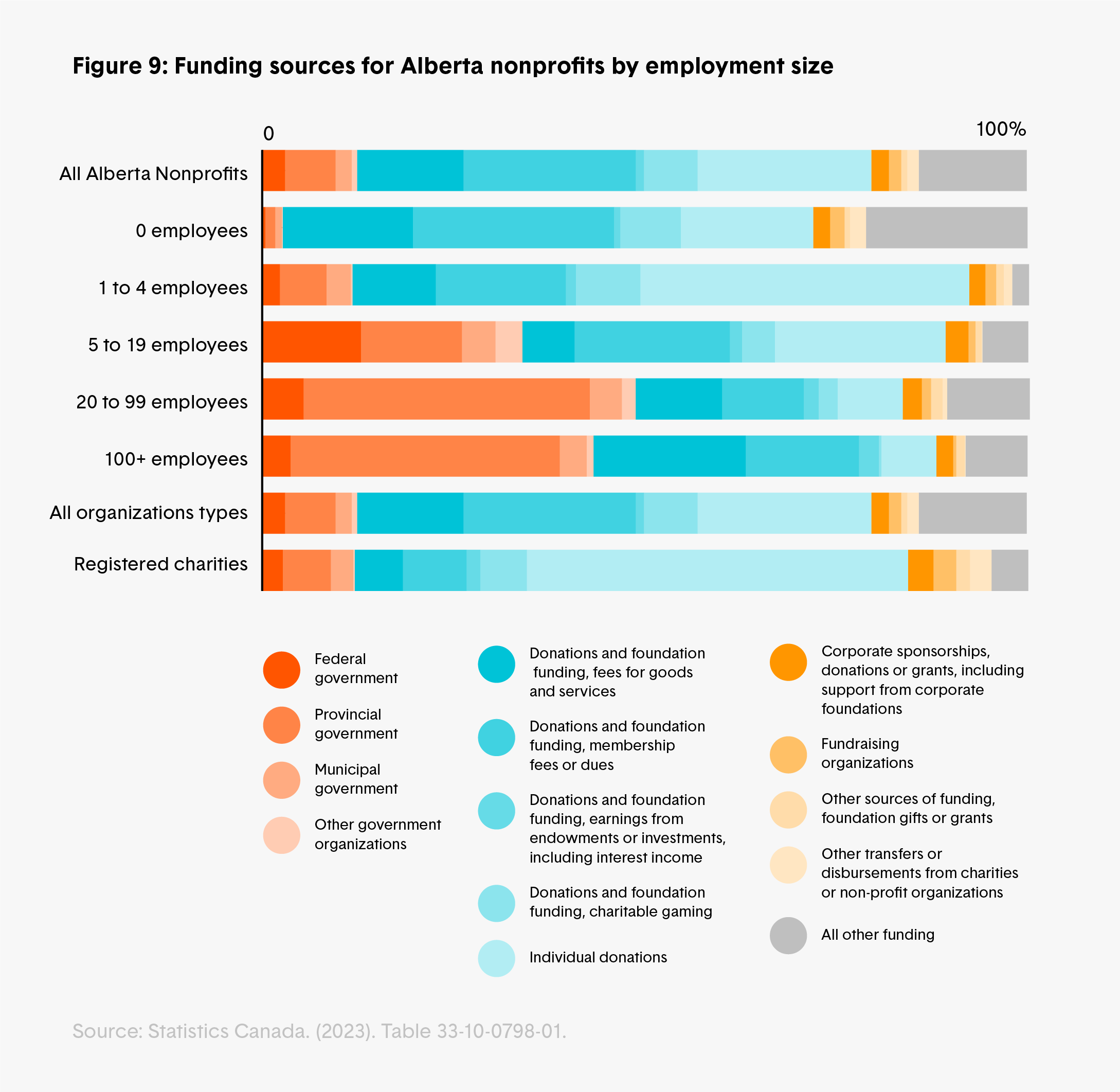
The most common sources of funding for Alberta nonprofits are[21]:
Membership fees or dues (22.5%)
Individual donations (22.7%)
Fees for goods and services, other than those provided to government (13.9%)
This changes according to size. Among larger nonprofits, the provincial government is the most common source of funding.
37.4% for organizations with 20-99 employees
35.2% for organizations with 100 or more employees
It also changes when we look at charities as opposed to all nonprofits:
49.8% of charities receive funding from individual donations
Explore Figure 9 to dive into more detail by employee size. Statistics Canada also makes this data available by subsector.
Government funding
Government funding accounts for just over a third of total nonprofit revenue in Alberta, with more than half of that coming from the provincial government. Federal funding has remained fairly stable stable, decreasing slightly 2021-2023 after a sharp increase in 2020. In Alberta, provincial and municipal governments contributed less in 2020, but have been increasing their contributions since then [23].
Recommendations to Funders
Our findings offer a foundation for further conversation and analysis, which will draw on the expertise and lived experience within Alberta’s nonprofit sector. To request a presentation or discussion of this report, contact policy@thenonprofitchamber.org.
Key Takeaways:
Increase access to unrestricted (core) funding.
Prioritize multi-year, flexible funding streams that allow nonprofits to allocate resources where they are most needed—particularly for staffing, overhead, and operations. Flexibility fosters both stability and innovation.
Invest in fair compensation and workforce wellbeing.
Recognize that staff retention, equity, and mental health are central to organizational sustainability. Support wage parity with comparable sectors, robust benefits, and wellbeing initiatives to reduce burnout and turnover.Cover the true cost of delivery.
Adjust program-based funding to include administrative, infrastructure, and indirect costs. Ensuring that organizations can “keep the lights on” is essential to mission delivery.
Stabilize funding across economic cycles.
Develop mechanisms that protect nonprofit operations from shocks such as inflation, tariffs, or sudden drops in donations. Funding models that smooth volatility strengthen long-term resilience. Unrestricted funding plays a key role here.
Align with nonprofit resourcing priorities.
Review the resourcing priorities outlined in Figure 6 and consider their relevance to the organizations and programs you support.Embrace Trust-Based Philanthropy.
Adopt approaches that “address the inherent power imbalances between funders, nonprofits, and the communities they serve.” Trust-Based Philanthropy incorporates many of the recommendations listed above through six core practices. Learn more through Imagine Canada’s resource, this fact sheet, or this overview video.
A Sector in Motion

2024 has been a year of resolve and progress. Led by the Nonprofit Chamber, Nonprofits Vote identified 5 policy priorities in the run up to the 2023 provincial election.
Nonprofits Vote provided a platform for nonprofits during the 2023 provincial election anchored by the 5 policy priorities. All parties responded to them, with Danielle Smith and Rachel Notley addressing them in two public forums hosted by Nonprofits Vote to more than 300 nonprofit employees.
Policy priorities will be updated in a robust consultation process, with advice from the Nonprofits Vote Council, starting in 2026 for the 2027 election period. We are pleased to share our progress towards these priorities over the 24/25 fiscal year with significant developments in Workforce, Data, and an Empowered Sector.

1. Appropriate Funding
Consult with Alberta nonprofits to identify and communicate funding priorities, and collaborate with funders to allocate resources where they are most needed.
Progress in 24/25:
Highlighting a clear case for investment in nonprofits in this State of the Sector 2025, using data gathered from nearly 300 nonprofit leaders in an interactive online budgeting tool on nonprofit funding priorities.
The Nonprofit Chamber prepared a budget submission for 2025, with a request for two major nonprofits grant streams Community Initiatives Program (CIP) and Community Facility Enhancement Program (CFEP) to be adjusted for growth + Inflation. Following the 2025 budget, the Nonprofit Chamber prepared a brief budget analysis highlighting key Ministries of particular interest to Alberta’s nonprofits.

2. A Workforce Strategy
Undertake a labour market study and strategy to stabilize the nonprofit workforce through addressing recruitment and retention concerns.
Progress in 24/25:
With financial support from the Minsitry of Arts, Culture, and Status of Women, the Nonprofit Chamber conducted a Workforce Feasibility Study, which we published in April 2025. One of the study’s central recommendations is the creation of a Nonprofit Workforce Sector Council to lead and coordinate implementation of a provincial workforce strategy. This council would serve as a hub for workforce data, planning, and collaboration, ensuring resources are used efficiently and that workforce decisions are guided by shared priorities. Our next step in this project is to secure funding to establish a Workforce Sector Council.
The Government of Alberta is leading research to improve volunteerism in the province, in consultation with sector leaders such as Volunteer Alberta.

3. Better Data Collection
Collaborate on data collection to ensure government and nonprofits can be more effective through data-informed actions.
Progress in 24/25:
Following many years of advocacy led by the Nonprofit Chamber, the Government of Alberta published the Alberta Nonprofit Listing Dashboard: a publicly accessible tool designed to provide valuable data about the province's nonprofit organizations in an interactive and user-friendly format. The dashboard has been developed through collaborative efforts between Arts, Culture and Status of Women, Service Alberta and Red Tape Reduction (SARTR), the Treasury Board and Finance (Office of Statistics and Information), and the Government of Alberta's Technology and Innovation team. With this tool, users can search for:
The total number of nonprofit organizations across Alberta
Nonprofits by community and constituency
The active status of nonprofits throughout the province
The Nonprofit Chamber has entered a data sharing agreement with Arts, Culture, and Status of Women to combine sub-sector data we hold to create an enhanced dashboard that you can now find on the Chamber’s website. We are also working in partnership with ACSW, and collaboratively with other Alberta nonprofits, to advance data collection on registry forms and annual nonprofit returns.
As the work of Alberta’s Nonprofit Data Strategy officially comes to a close, PolicyWise for Families and Children and the Nonprofit Chamber are happy to announce the start of a new chapter, which builds on the last four years of work. As one of the original partners of the Nonprofit Data Strategy, the Nonprofit Chamber will be taking ownership of the nonprofit dashboard and using that foundation to take nonprofit sector data to the next level. Watch for this dashboard on the Chamber's website soon. PolicyWise for Families and Children will continue to leverage strengths in building capacity with data training and education opportunities for Alberta’s nonprofits.

4. A Door To Government:
Explore creating a dedicated space in government to share challenges, successes and opportunities with renewed partnership from the Government of Alberta to address them.
Progress in 24/25:
The Community Engagement Branch within Arts, Culture, and Status of Women, along with Minister Fir and her team have been excellent partners. We have a brief in the works to elevate their support of Alberta’s nonprofits even more and look to the next provincial election as the timeline

5. An Empowered Sector:
Reduce the red tape burden while making sure we continue to operate within the rules.
Progress in 24/25:
In March of 2025, Service Alberta and Red Tape Reduction announced several changes that respond directly to the feedback from a Charitable Gaming Review, giving charities broader discretion in determining how gaming proceeds are used to support their programs and services. The Nonprofit Chamber participated by invitation in extensive stakeholder work that engaged 90 charitable organizations across the province.
By invitation, the Nonprofit Chamber submitted a written response to the Standing Committee on Resource Stewardship, for their comprehensive review of the Personal Information Protection Act. Our submission recommended no changes to the way PIPA is applied to nonprofits. Subsequently, the Nonprofit Chamber was invited to present to the committee. The committee began the review in January, 2024 and has now completed its report, which accepted our recommendations. The report is now with Cabinet to draft amendments to the Act and we continue to monitor developments.
By invitation, the Nonprofit Chamber participated in the Municipal Affairs review of Community Organization Property Tax Exemption Regulation (COPTER). Throughout the consultations, the Nonprofit Chamber emphasized consistency, fairness, and transparency in applying COPTER. The principles governing COPTER were established in 1997 and we urged a review of those principles to more accurately reflect the breadth and depth of the sector, while also increasing the ability for municipalities to achieve the policy intent of supporting nonprofits that contribute to public benefit. We also strongly suggested that Municipal Affairs undertake a more thorough consultation with nonprofits on this policy review. Following the stakeholder engagement process, the Nonprofit Chamber was invited to meet with Minister McIver, then Minister of Municipal Affairs, to convey our recommendations and concerns with the current policy. Recommendations from this review did increase clarity and transparency on eligibility for nonprofits.

Conclusion
It All Starts with Data
We’re especially excited about the progress made this year on data, which provides a foundation for all subsequent work: workforce, funding, and an empowered sector. Our thanks to the Ministry of Arts, Culture, and Status of Women (ACSW) and Service Alberta for helping make this possible.
Until now, Alberta’s nonprofits didn’t have access to a shared list of organizations across the province. That changed this year. ACSW worked with Service Alberta to turn the information they collect for regulatory purposes into usable data, which improves our understanding of our sector and supports informed decisions. They created this dashboard, and also merged their listing data with our subsector data to create this dashboard.
For the first time, we can see where nonprofits are located by electoral riding, when they were registered, what subsector they belong to, and their current status. The data isn’t perfect, but it shows what’s possible when we use existing information to learn more about ourselves. We can also see where more detail is needed—especially within the “social services” category, which includes many different types of organizations. We’re already partway there: many of our listings are now categorized with greater detail within social services, and we plan to continue integrating this data into the current dashboard.
Through Statistics Canada, we have information on salaries and wages, revenues and expenses, and sources of funding across subsectors and organization sizes. This helps us see where money is coming from, how it’s being spent, and better understand the realities of resourcing nonprofit work. Some of this data isn’t collected regularly, so as a sector, we can encourage the federal government to keep these products available. Data from the Canada Revenue Agency – collected for regulatory purposes - also has strong potential to inform future sector planning.
We’ll keep working to fill the gaps and strengthen the data available about Alberta’s nonprofits. You can help by exploring the dashboard, sharing how it’s useful to you, and letting us know how it could be improved.
Let’s keep the momentum going!
Bibliography
[1] Statistics Canada. Table 36-10-0617-01 Employment in non-profit institutions by sub-sector (x 1,000)
[2] Statistics Canada. Table 36-10-0651-01 Employment in the non-profit sector by demographic characteristic
[3] Statistics Canada. Table 36-10-0614-01 Gross domestic product (GDP) and income of non-profit institutions by activity (x 1,000,000)
[4] Statistics Canada. Table 36-10-0618-01 Economic value of volunteering activity (x 1,000,000)
[5] Statistics Canada. Table 33-10-0753-01 Percentage of total non-profit organizations, 2023
[6] Statistics Canada. Table 36-10-0651-01 Employment in the non-profit sector by demographic characteristic
[7] Ibid.
[8] Ibid.
[9] Food Banks Canada. (2025). Hunger Count 2025.
[10] Charity Insights Canada Project. (2025). Weekly Results: 3.26 Mental Health and Well-Being.
[11] Ibid.
[12] Turner, A. (October 27, 2025). “The remote worker paradox: Why remote workers are thriving yet still thinking of quitting”. The Future of Good.
[13] KPMG. (November 27, 2025). Canadian employees call for clear and transparent AI policies as adoption grows.
[14] Chin, F. (2025) The AI boom must not worsen Alberta’s urban-rural divide.
[15] Nonprofit Quarterly. (April 7, 2025). How Nonprofits Can Create Ethical AI Policies.
[16] Wong, J. (March 18, 2025). Edmonton charities caught up in Canada-U.S. tariff war brace for impacts on clients.
[17] Charity Insight Canada Project. (2025). Weekly Results: #3.21 Unrestricted Funding.
[18] Statistics Canada. Table 36-10-0613-01 Production, income and outlay accounts of non-profit institutions (x 1,000,000)
[19] Ibid.
[20]Statistics Canada. Table 33-10-0799-01 Sources of expenditures by non-profit organizations, 2023.
[21] Statistics Canada. (2023). Table 33-10-0798-01.
[22] Statistics Canada. (2025). Table 36-10-0613-01.
[23] Ibid.
[24] Statistics Canada. (2024). Table 33-10-0802-01
[25] Statistics Canada. (2025). Table 11-10-0002-01
[26] Statistics Canada. (2025). Table 11-10-0130-01
[27] Statistics Canada. (2025). Table 33-10-0796-01
Linked Resources
Community Foundations of Canada. (2021). Fact Sheet: Trust Based Philanthropy.
Government of Alberta. (2025). Alberta Non-profit Listing Dashboard.
Imagine Canada. (2022). Funders’ Perspectives on Unrestricted Funding in Canada.
Nonprofit Finance Fund. (2025). Funder Best Practices.
Philanthropic Foundations Canada. (2022). Reflections on Trust-Based Philanthropy.
The Nonprofit Chamber. (2025). Building A Stronger Nonprofit Workforce.
The Nonprofit Chamber. (2025). Mandate Letter Analysis Overview.
Trust-based philanthropy project. (2025). What is trust-based philanthropy?
Credits
Authors
Celia Lee and Alexa Briggs
Design & Illustration
Fran Motta
Reference as
The Nonprofit Chamber. (2025). The Change Starts with Us: 2025 State of the Sector Report
Thank you to our funders! .
Anonymous Donor
The Calgary Foundation
Government of Alberta
The Muttart Foundation
Suncor Energy Foundation